
What's the Council Approval Process for Building a Two-Storey Duplex in Wollongong?

Two-storey duplexapproval in Wollongong isn't straightforward, and that's an understatement. You're dealing with height restrictions, setback requirements, parking mandates, and council officers who've seen every attempt to squeeze extra space out of a block.
I've guided hundreds of families and investors through this exact process. Some sailed through CDC approval in weeks. Others spent six months navigating Development Applications because one measurement was off. Let me show you how to avoid the second scenario.
Understanding Wollongong's Two-Storey Duplex Restrictions
Before you get excited about that architect's render showing your stunning 2-storey duplex, you need to understand what Wollongong Council actually allows. These aren't suggestions, they're hard limits that'll kill your project if you ignore them.
Zoning Requirements That Determine What You Can Build
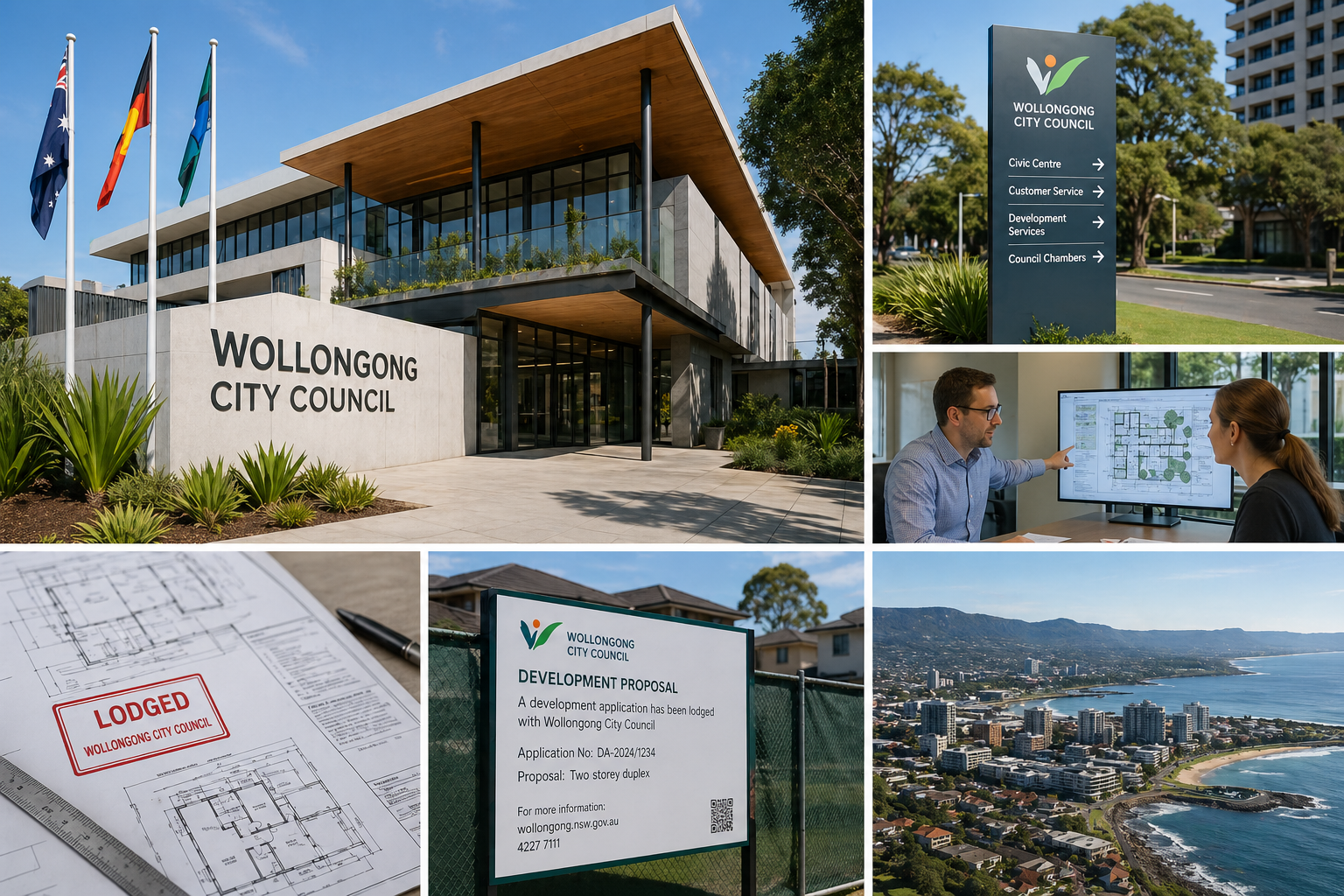
Not every Wollongong block can accommodate a 2-storey duplex. Your land's zoning matters more than you think.
R2 Low-Density Residential zones dominate established suburbs throughout Wollongong and the South Coast. These zones typically permit duplexes, but often with stricter controls on height and bulk. R3 Medium Density Residential zones offer more flexibility for two-storey development, but aren't universally available.
Check your property's zoning on the Council's planning portal before you spend a cent on designs. CKS Projects can assess this for you, but it's worth understanding yourself. Some zones prohibit duplexes entirely, others cap building height at a single storey, and a few allow 2-storey construction with conditions.
Your Section 10.7 Planning Certificate tells you everything. Order it from Council ($150-200) and read the zoning clause carefully. If it says your land sits in R2 with a 9-metre height limit, you're building two storeys. If it caps height at 6 metres, you're staying single level.
Height Limits and Setback Rules for Two-Storey Duplexes
Height restrictions make or break 2-storey duplex projects in Wollongong. Most residential zones cap building height at 8.5 to 9 metres. That sounds generous until you factor in floor-to-ceiling heights, structural elements, and roof pitch.
A typical 2-storey duplex needs approximately 6.5 metres from ground to the underside of the roof structure. Add your roof (another 2-3 metres depending on pitch), and you're pushing 9 metres total. There's almost no margin for error.
Setbacks compound the challenge. Council typically requires larger setbacks for 2-storey buildings than single-storey ones. You might need 6 metres from your rear boundary for the second storey, versus 4 metres for the ground floor.
Side setbacks often increase, too. Single storey might require 900mm, but two-storey walls jump to 1.2 metres or more. These extra setbacks eat into your buildable area, affecting room sizes and overall duplex feasibility.
Floor Space Ratios That Impact Your Design
Floor Space Ratio (FSR) determines how much building you can squeeze onto your block. Wollongong typically allows 0.5:1 FSR in R2 zones, meaning on a 600sqm block, you can build 300sqm of total floor area across both duplex dwellings.
2 storey development lets you maximise FSR without consuming all your land area. Instead of spreading 300sqm across ground level, you build 150sqm downstairs and 150sqm upstairs. This preserves outdoor space and parking areas.
However, FSR calculations include everything: garages, covered patios, and balconies over certain sizes. CKS Projects often sees designs that look compliant until you add up all the covered areas. Suddenly, you're 20sqm over the FSR limit and Council rejects your application.
Planning Your Two-Storey
Duplex Project
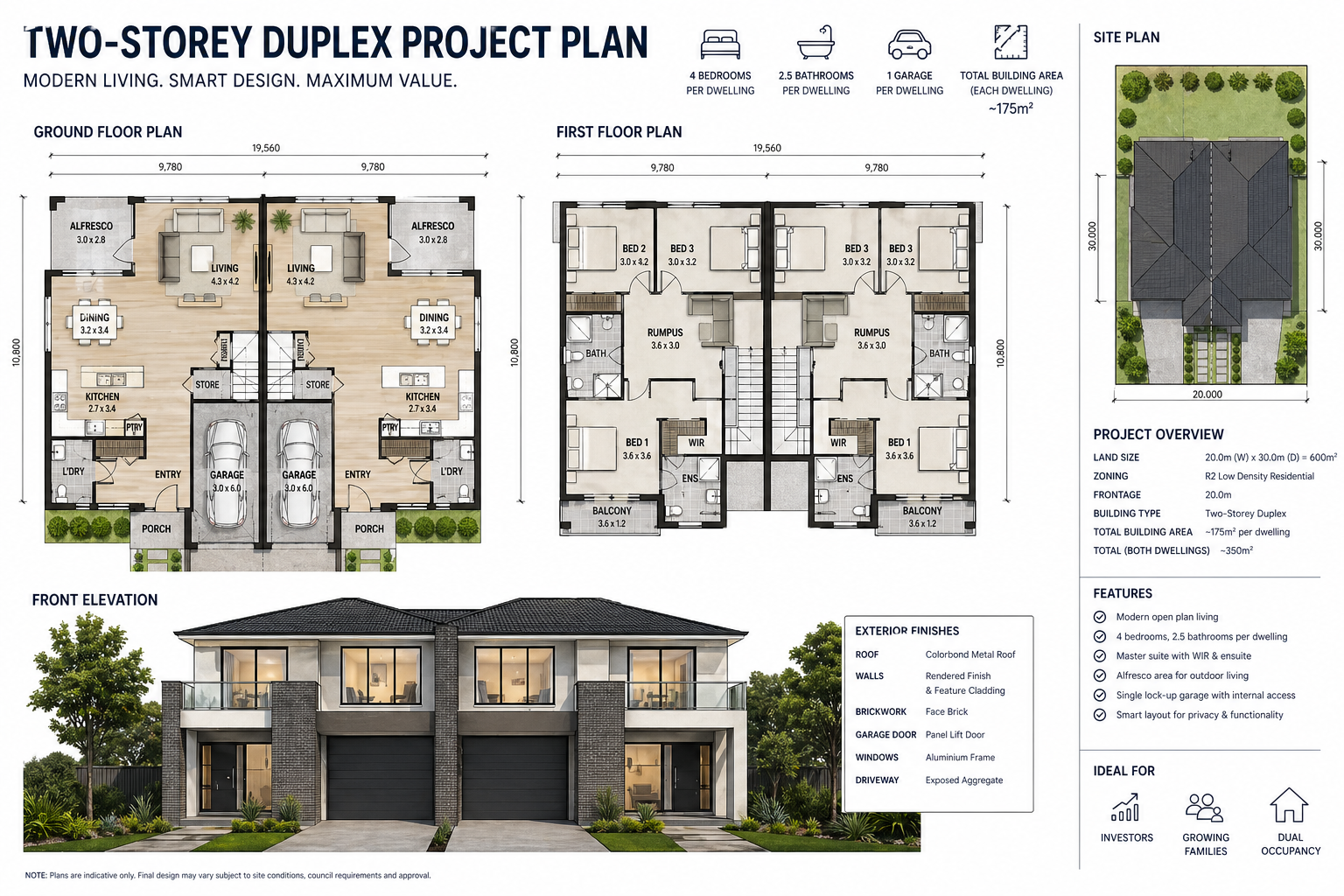
Smart planning prevents expensive redesigns halfway throughcouncil approval. Get these considerations right before your architect finalises plans.
Site Assessment for Vertical Development
2-storey construction on Wollongong blocks demands thorough site analysis. Unlike Sydney's flat terrain, we're dealing with slopes, rock, and varying soil conditions.
Your site's topography affects everything. Building up on a sloping block might require split-level designs or extensive cut and fill. Rock near the surface (common in Wollongong) increases foundation costs dramatically. Poor drainage needs addressing before adding a second storey.
Order a geotechnical report early. It'll cost $1,500-2,500, but it tells you exactly what foundations your 2-storey duplex needs. Reactive clay soils? You'll need deeper footings. High water table? Drainage systems become critical.
Investors who skip this step often discover mid-construction that their budget doesn't cover the actual foundation requirements. That "cheap" block suddenly needs $45,000 in pier foundations.
Parking Requirements for Multi-Level Duplexes
Council demands specific parking for duplex developments, and the requirements increase for larger dwellings. Generally, you need two spaces per dwelling, four spaces total.
2-storey duplexes typically offer 3+ bedrooms per dwelling, which might trigger additional parking requirements. Some councils want visitor parking too. On smaller blocks, fitting four proper car spaces plus visitor parking becomes impossible.
Your spaces need to meet dimensional standards: 5.5 metres long, 2.6 metres wide minimum, with adequate manoeuvring space. A two-storey development can't compromise these requirements just because you're building up instead of out.
Think about where vehicles go. Ground-floor garages work well but consume valuable living space. Tandem parking (one behind another) counts as two spaces but frustrates tenants. Side-by-side spaces need wider frontages.
Privacy Considerations When Building Up
Adding a second storey creates privacy challenges that single-storey duplexes don't face. Your upper-level windows and balconies overlook neighbouring properties, triggering Council scrutiny.
Wollongong Council enforces privacy controls strictly. Windows facing neighbouring properties within certain distances need obscure glazing, highlight windows, or screening. Balconies often require privacy screens or strategic positioning.
Design upper-level living areas and balconies toward street frontages or internal courtyards when possible. This minimises overlooking while maximising your own privacy. Bathroom and laundry windows can use obscure glass, but bedroom windows present challenges.
CKS Projects typically addresses this during design by positioning upper-floor bedrooms away from boundaries, using clerestory windows where needed, and incorporating architectural screening that looks intentional, not like an afterthought.
The Complying Development Certificate Path in Wollongong
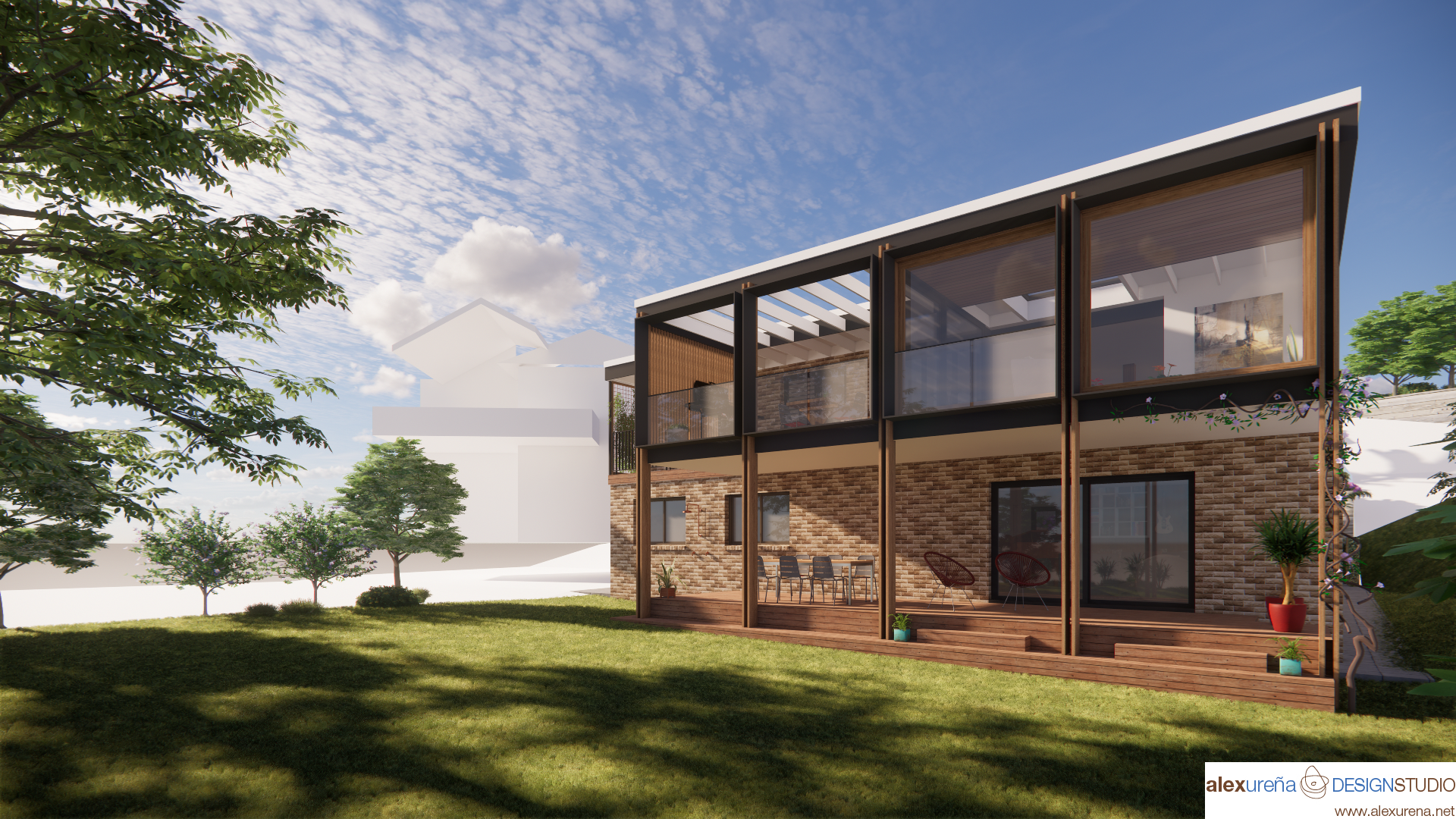
CDC approval offers the fastest path to starting construction. If your 2-storey duplex qualifies, you'll have approval in 4-6 weeks instead of 3-4 months.
Does Your 2 Storey Duplex Qualify for CDC?
Not every 2-storey duplex in Wollongong can use the CDC pathway. State Environmental Planning Policy (Low Rise Housing Diversity Code) sets strict criteria your project must meet.
Your land needs minimum dimensions: typically 15-metre frontage, 600sqm area. The site can't be bushfire-prone, flood-affected, or heritage listed. Your 2-storey duplex must comply with all development standards: height limits, setbacks, FSR, and parking.
Here's where it gets specific. Each dwelling needs a maximum of 200 sqm floor area. Your second storey can't exceed the ground floor area. Materials and design must meet prescribed standards. Vehicle access needs to be safe and practical.
One non-compliance kills your CDC eligibility. If your block has 14.8-metre frontage instead of 15 metres, you're doing a full DA. If heritage trees require removal, CDC won't work.
Documentation Required for CDC Approval
CDC applications demand comprehensive documentation. You can't wing this; Council and private certifiers check everything thoroughly.
You'll need:
Architectural plans: Site plan, floor plans, elevations, sections
Engineering drawings: Structural, civil, hydraulic
BASIX certificate: Energy and water efficiency compliance
Geotechnical report: Soil conditions and foundation recommendations
Stormwater management plan: Showing how water drains safely
Arborist report: If significant trees exist on site
Waste management plan: Construction and operational waste handling
Each document must be current (typically less than 12 months old) and prepared by qualified professionals. Missing or outdated documentation delays approval or triggers rejection.
CKS Projects coordinates all these reports before lodging CDC applications. We've learned that incomplete submissions just waste time and money.
How Long Does the CDC Process Actually Take
CDC approval should take 20 business days (four weeks) by law. In reality? Add another 2-3 weeks for your team to prepare documentation properly before lodging.
The actual timeline depends on documentation quality and certifier workload. Private certifiers often process faster than Council, but charge more. You're looking at $5,000-8,000 in certifier fees for a 2-storey duplex CDC.
If the certifier requests additional information (RFI), add another 2-4 weeks. Common RFI triggers include insufficient detail on plans, outdated reports, or non-compliances that weren't obvious initially.
Budget 6-8 weeks from deciding to pursue CDC until receiving your certificate. This assumes you had preliminary designs ready and your documentation team works efficiently.
When You Need a Full Development
Application Instead
Sometimes, CDC isn't possible, no matter how much you want that faster approval. Recognising DA requirements early saves months of wasted effort pursuing the wrong pathway.
Site Characteristics That Trigger DA Requirements
Certain site conditions automatically disqualify you from CDC, pushing your 2-storey duplex into the Development Application process. Wollongong's topography makes this common.
Steep slopes exceeding certain gradients need a DA assessment. Sites with significant vegetation or trees require DA, especially if protected species exist. Heritage items on or near your property trigger DA requirements, too.
Contaminated land needs DA regardless of your design. If your block previously housed industrial uses, service stations, or certain commercial activities, contamination assessment and DA become mandatory.
Bushfire-prone areas require comprehensive bushfire assessment reports and cannot use CDC pathways. Much of Wollongong's western suburbs and escarpment areas fall into this category.
The DA Timeline for Complex 2 Storey Projects
Development Applications take longer; there's no avoiding it. Budget minimum 10-12 weeks from lodgement to determination, often longer for 2-storey duplexes in sensitive locations.
Council has up to 40 days to request additional information after lodgement. Complex projects always trigger information requests. You might need amended plans, additional traffic reports, acoustic assessments, or shadow diagrams.
Public notification adds time, too. Council notifies neighbouring properties, which get 14 days to comment. If objections arrive, Council needs time to assess them, and you might need to respond. Contentious projects can stretch to 16-20 weeks.
CKS Projects builds these timelines into our project schedules from day one. Better to expect 14 weeks and be pleased if it's quicker than planned for 8 weeks and face constant delays.
Working with Council Through the DA Process
DA approval requires active engagement with Wollongong Council's planners. This isn't a passive waiting game; it's a negotiation.
When Council requests information, respond quickly with complete answers. Partial responses trigger more information requests. If Council raises concerns about design elements, consider modifications rather than digging in. Sometimes adjusting a setback by 200mm or reducing a window size resolves objections immediately.
Attend pre-DA meetings if possible. Many councils offer this service, letting you discuss your 2-storey duplex concept before formal lodgement. You'll learn what concerns exist and can address them in your initial application.
Stay professional throughout. Council planners deal with hundreds of applications. Being responsive, reasonable, and professional moves your project forward faster than complaints about the process.
CKS Projects specialises in navigating council approval for 2-storey duplexes throughout Wollongong and the South Coast. Our years of experience mean we know exactly which approval pathway suits your project and how to prepare documentation that satisfies Council requirements the first time. We handle the entire CDC or DA process, keeping you informed while managing the complexity.
Ready to get your 2-storey duplex approved? Let's assess your site and start the approval process properly.
DESIGNING A DUPLEX THAT DELIVERS RETURNS
Whether you're looking to live in one and rent the other, build for extended family, or maximise your land’s potential, this guide will help you avoid costly mistakes and make confident decisions.
