
 2026 MBA NSW Award WinnerContract Homes $1.9M–$2M, Southern Regions
Knockdown Rebuild Builder in Wollongong
CKS Projects demolishes your old house and builds a new home designed for your block, managing the site assessment, approvals, demolition and construction under one fixed-price contract. Keiron Moore assesses every site personally.
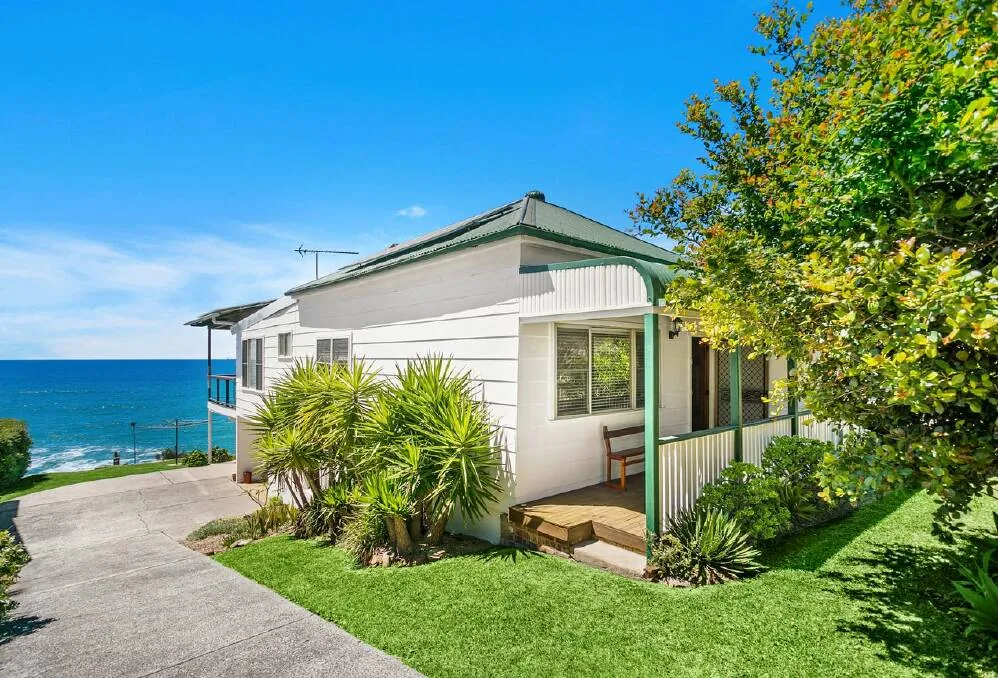
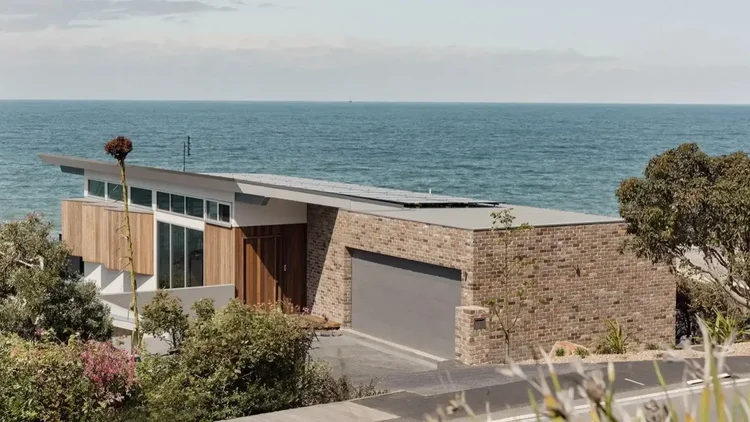
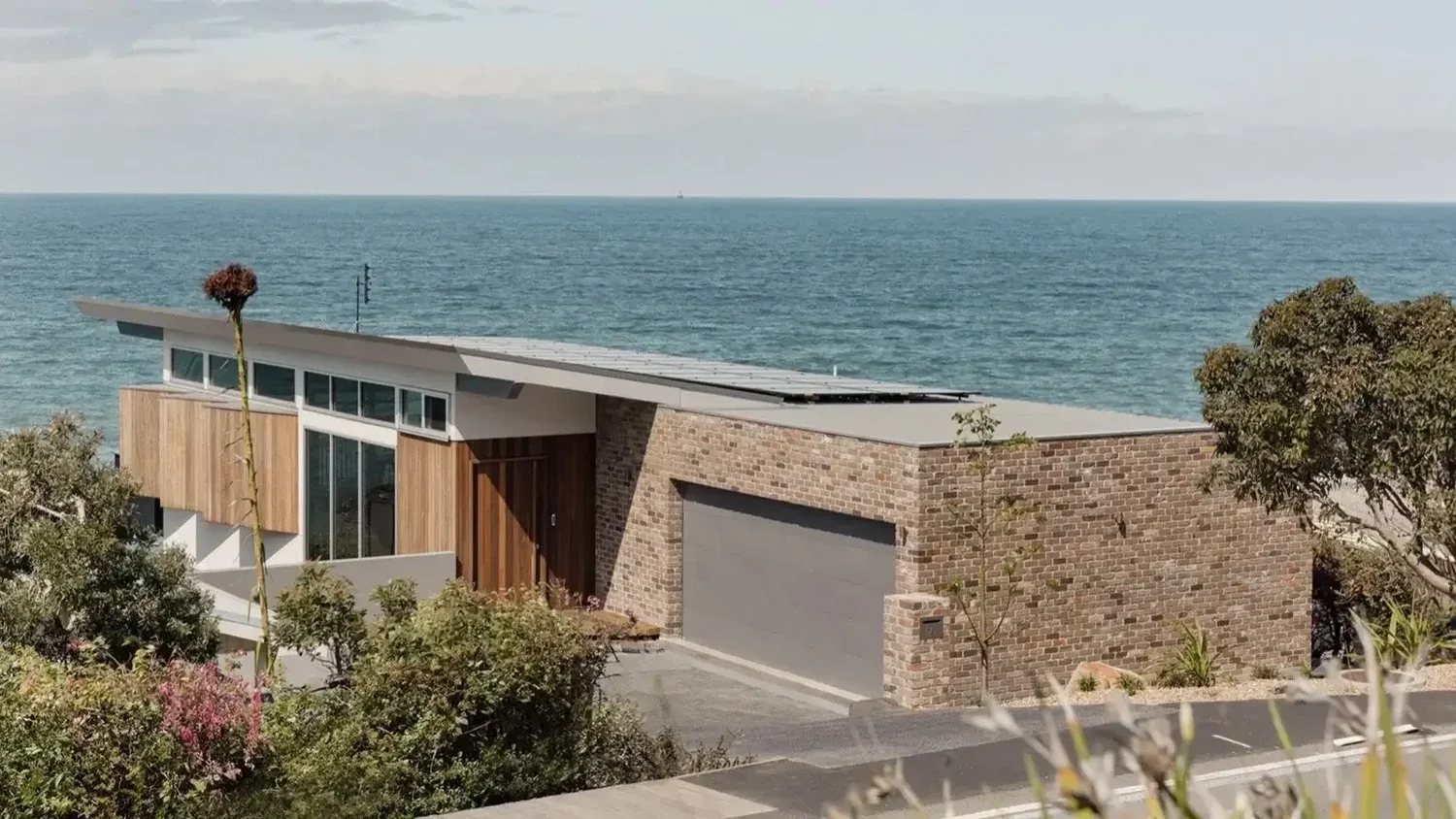
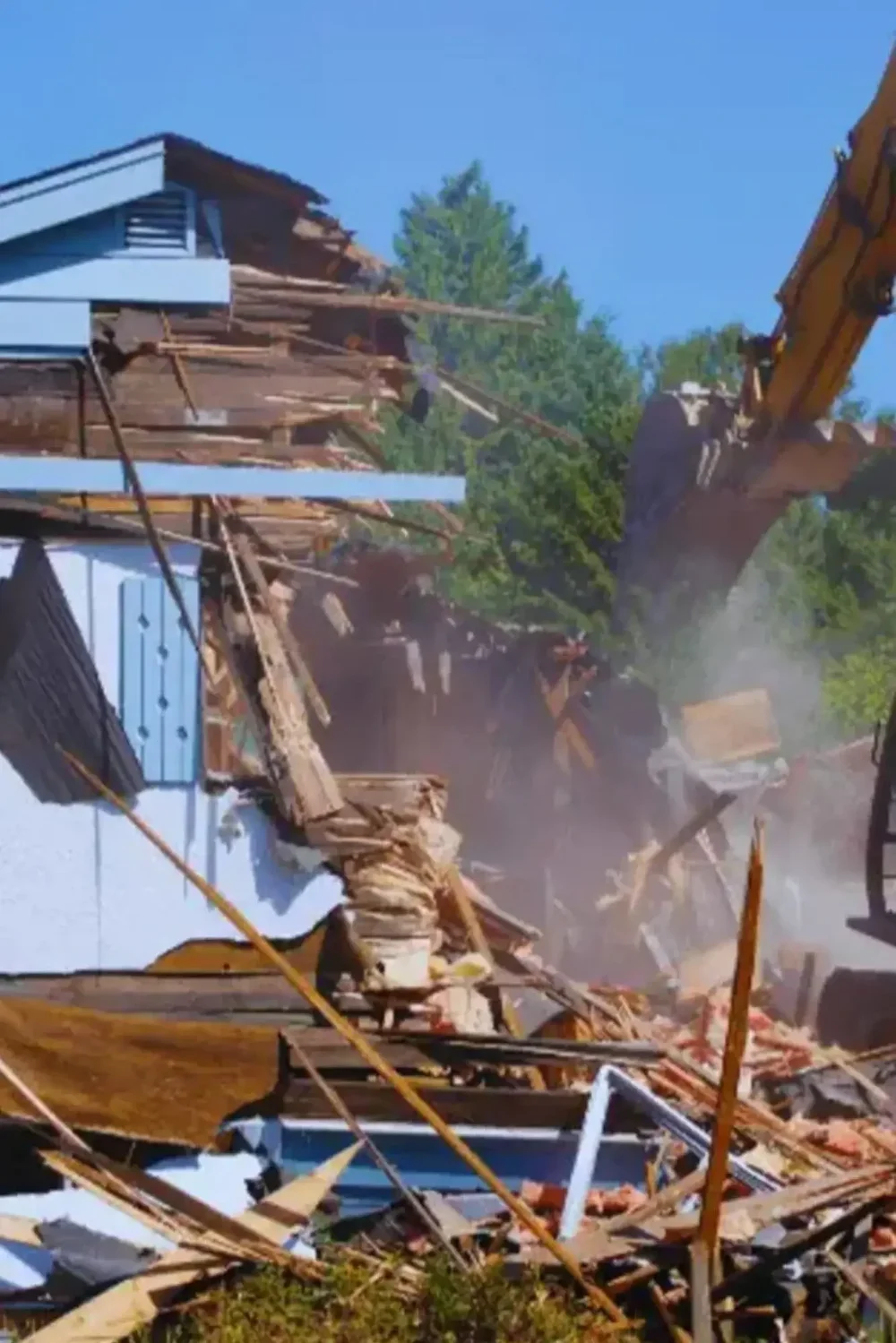
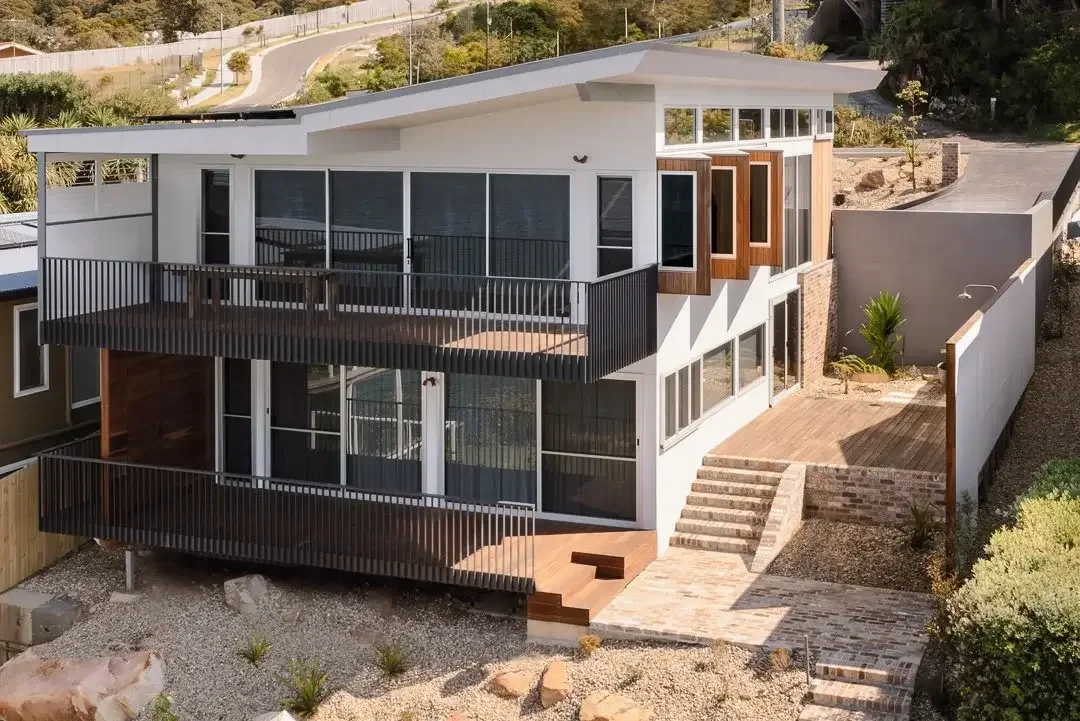
Wombarra Clifftops: the old cottage knocked down, a new split-level home on the same block. Tap a photo to enlarge.
- 2026 MBA NSW WinnerContract Homes $1.9M–$2M
- Licence 258735CNSW contractor licence, builder
- 5.0 Google rating26 reviews
- One fixed priceDemolition, approvals and build
Book a free discovery call
No obligation. Talk to the builder, not a salesperson.
Prefer to talk? Call 0468 080 469
Wombarra Clifftops: the old cottage on a clifftop slip area, and the split-level CKS Projects knockdown rebuild that won its category at the 2026 MBA NSW Southern Regions awards.
Book my discovery callRenovating Hides Surprises. A Knockdown Rebuild Doesn't.
Most renovation budgets are set before anyone has opened a wall. Then the wall comes open: asbestos in the eaves, wiring that predates the current standard, footings never engineered to carry a second storey, plumbing that has to be replaced anyway. The quote moves, and it keeps moving.
A rebuild removes that guesswork. The old structure goes, and what replaces it is designed for how your family lives now, built to current standards, with full builder warranties from day one.
| Major renovation | Knockdown rebuild | |
|---|---|---|
| Existing structure | Old footings, wiring and plumbing stay, or are found and priced mid-job | Removed. Everything is new and engineered for the new design |
| Design | Limited by the walls, levels and footprint you already have | Designed around your block, orientation and how you live |
| Cost certainty | Hidden problems often surface after work starts | Scope is known before the fixed price is signed |
| Compared with moving | No stamp duty, but you live with the compromises | No stamp duty, and a new house on the land you already own |
Weighing up a rebuild? Get an honest view of your block before you spend on design.
The Knockdown Rebuild Process, Step by Step
Seven stages, one team and one contract, so you always know what is happening and what comes next.
Free discovery call
We talk through your block, brief and budget before anyone visits. If a rebuild isn't right for you, we say so.
On-site assessment
Keiron walks your block: slope, demolition access, soil indicators, orientation, existing services and anything that affects the approval pathway.
Design and floor plan
A custom design developed around your block and how your family uses a house, not a catalogue plan adjusted at the edges.
Documentation
Working drawings, engineering, BASIX, council plans and demolition permits, prepared as one package.
Approvals
Lodged with Wollongong City Council or a private certifier, depending on the pathway your site qualifies for, and managed to determination.
Demolition, then construction and handover
Asbestos assessment and licensed removal if needed, demolition, then your new home built by trusted local trades with independent inspections at each stage. You get the keys to a finished home.
Demolition, DA and CDC Approvals Handled With Wollongong City Council
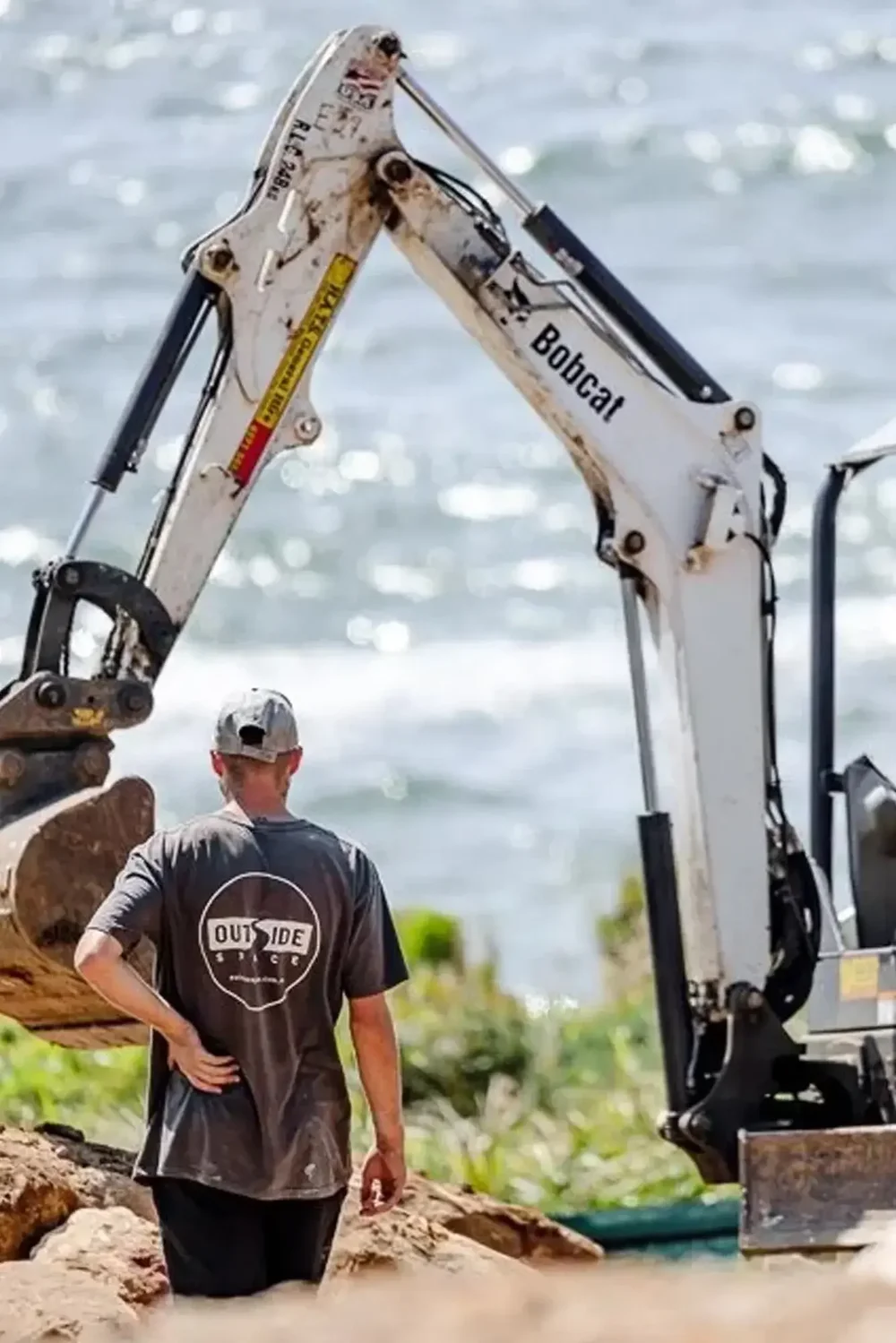
Demolition sounds like the hard part. It isn't, when the right people manage it. CKS Projects coordinates certified demolition contractors, asbestos assessment and licensed removal, waste disposal, erosion and sediment control, and site safety.
NSW requirement
Asbestos. Homes built before the late 1980s commonly contain it. A qualified inspector assesses the house first. Under SafeWork NSW rules, a licensed professional must remove any friable asbestos and any amount of bonded asbestos over 10 square metres, and SafeWork recommends a licensed professional for any amount. Demolition follows the clearance certificate.
Two approval pathways. A Complying Development Certificate (CDC) is issued by a private certifier or council for projects that meet set state standards, in as little as 20 days. A Development Application (DA) is assessed by Wollongong City Council, where the NSW average determination time is 70 days. A DA is needed where the site is in a heritage conservation area, is bushfire-prone or flood-affected, or where the design falls outside the complying development standards. Every new home also needs a BASIX certificate.
We confirm which pathway your block qualifies for at the site assessment, before the design is locked in, so the approval route is priced into the contract rather than found halfway through. How council approval works.
Sources: SafeWork NSW, asbestos · NSW Planning, complying development · NSW Planning Portal, BASIX. Requirements change, so we confirm them for your property.
Knockdown Rebuilds on Difficult Illawarra Blocks
Not every site is straightforward, and in the Illawarra a lot of them aren't. The escarpment suburbs fall away toward the coast, inner-suburb blocks are often narrow, and anything close to the water changes the specification rather than the process.
Sloping and steep blocks
Split-level and stepped floor plans engineered for the fall, starting from the geotechnical report. Building on a sloping block.
Narrow lots
Designs that work inside tight side setbacks, with demolition and delivery access planned early.
Corner and limited-access blocks
Machinery access, frontage and driveway grades resolved before demolition is booked.
Heritage overlays
Where the approval pathway and the design controls both change, usually to a DA.
Coastal and lakeside sites
Salt exposure drives cladding, fixings, glazing and roofing. Flood or acid sulfate soil overlays are resolved before design. Coastal homes.
Urban infill
Limited frontage and close neighbours, with privacy, overlooking and construction impacts planned in.
Wombarra Clifftops: A Knockdown Rebuild on a Demanding Clifftop Site
The existing home was demolished to create a blank canvas. Because the site is a classified slip area with subterranean water, close to a main road, the engineering and stormwater design were resolved before construction.
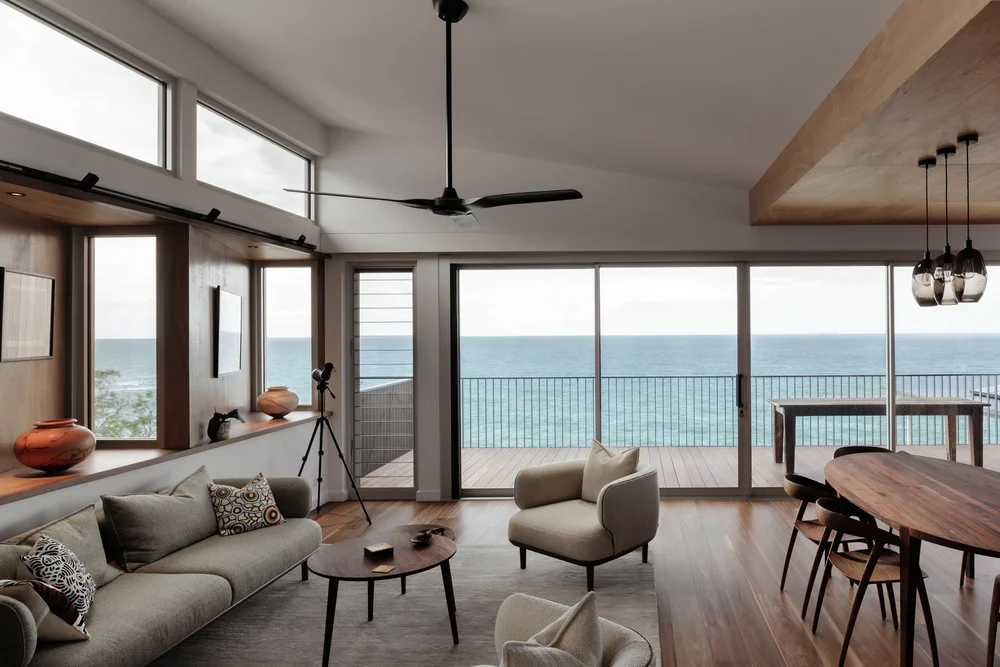
Wombarra Clifftops
A split-level home on the Wombarra cliffs with ocean and escarpment views, finished in polished concrete, recycled brick feature walls, timber stairs, and timber floors and ceilings upstairs. It won Contract Homes $1.9M–$2M at the MBA NSW 2026 Southern Regions Excellence in Building Awards.
View Wombarra Clifftops“Structural work, joinery, paintwork, every trade delivered to a high standard.”
Google review, published on CKS Projects' Wombarra Clifftops page
What Does a Knockdown Rebuild Cost in Wollongong?
The honest answer is that it depends on your block and your brief. Our knockdown rebuild cost guide sets out indicative ranges and a full worked budget, but these are the things that actually move the number on your block:
- Demolition scope: single-storey fibro is a different job from a two-storey brick home with a pool.
- Asbestos: a defined cost once the inspection is done, not a variable one.
- Slope and soil: steep blocks need engineered footings, retaining and often a split-level design. Reactive soil changes the slab.
- Site access: narrow frontage or a steep driveway affects machinery and deliveries.
- The new home: storeys, roof form, glazing and level of finish.
- Approval pathway: a DA takes longer than a CDC, and heritage or bushfire controls add documentation.
A genuinely fixed price
Every client receives a detailed fixed-price tender before any contract is signed. The full scope is priced up front, including demolition, site costs and approvals. No provisional sums hiding unknowns and no post-contract variations for items that should have been priced. The only thing that changes the number is a variation you choose to make.
When you compare Wollongong builders, ask each one whether the contract is genuinely fixed or contains provisional sums. The answer tells you a lot.
A Boutique Wollongong Builder, Accountable to You
CKS Projects is a boutique builder working across Wollongong, the Illawarra and the South Coast. It is not a volume builder and doesn't work from a catalogue of preset plans: every rebuild is designed for the block it sits on.
Managing Director Keiron Moore runs every site assessment personally, so you deal with the builder, not a sales representative. From site analysis to council approval, demolition and handover, one team manages the whole process under one fixed-price contract.
Read more about CKS Projects and Keiron Moore, or check the licence and insurance details on the verified credentials page.
| Business | CKS Projects (CKS Projects Aust Pty Ltd) |
|---|---|
| Managing Director | Keiron Moore, 25+ years in residential building. NSW Qualified Supervisor Certificate 69005S |
| NSW Contractor Licence | 258735C (Builder) |
| Award | Winner, Contract Homes $1.9M–$2M, 2026 MBA NSW Southern Regions Excellence in Building Awards (Wombarra Clifftops) |
| Memberships | Master Builders Association · Association of Professional Builders |
| Office | Unit 45/7 Waynote Place, Unanderra NSW 2526 Mon–Fri 8:00am–4:30pm, by appointment |
| Phone | 0468 080 469 |
Knockdown Rebuilds Across Wollongong and the Illawarra
CKS Projects is based in Unanderra and rebuilds across the published service area below, from the escarpment suburbs of the northern Illawarra to the South Coast and Southern Highlands. See how conditions and councils change from suburb to suburb on the Wollongong and Illawarra service areas page.
Wollongong City Council
- Stanwell Park
- Scarborough
- Clifton
- Wombarra
- Coledale
- Austinmer
- Thirroul
- Bulli
- Woonona
- Towradgi
- Wollongong
- Port Kembla
- Windang
Shellharbour City Council
- Warilla
Kiama Municipal Council
- Kiama
- Gerringong
- Gerroa
Shoalhaven City Council
- Berry
- Huskisson
Wingecarribee Shire Council
- Bowral
- Burradoo
- Moss Vale
Knockdown Rebuild Wollongong FAQs
The decision
What does KDR mean?
KDR is builder shorthand for a knockdown rebuild. It means demolishing the house you already own and building a new one on the same title, rather than renovating the existing structure or selling and buying elsewhere. The point of a KDR is that you keep the street, the school zone, the commute and the neighbours, and you get a house designed for the block it sits on and built to current standards.
Should I renovate, knock down and rebuild, or sell and buy again?
All three are legitimate answers, and the right one depends on the house and the block. Renovating usually wins when the existing structure is sound, the layout is close to what you want, and the property has character or a heritage overlay that a rebuild would lose. Rebuilding usually wins when the existing house is dated post-war fibro or brick veneer with asbestos, old wiring, termite damage or footings that cannot carry another storey, because a renovation then costs most of what a rebuild costs and still leaves an old house underneath. Selling and buying again is the option people overlook, but it carries transfer duty, agent fees and the risk of not finding the same location again. CKS Projects assesses all three at the site visit and will say so if renovating or moving is the better answer.
Is a knockdown rebuild cheaper than a major renovation?
On much of the Illawarra's older housing stock, yes, but not on paper. A renovation quote starts lower because it cannot yet price what is behind the walls. Once opening up reveals asbestos, rotting timber, outdated wiring, termite damage, old plumbing or footings never designed for a second storey, the variation list grows and the schedule slips. A rebuild is priced from a geotechnical report, a survey and a complete design, so the contract figure is known before work starts, and the new home comes with full statutory warranties from day one rather than a warranty over the renovated part only. Whether the rebuilt home is then worth more depends on the street and the block, so CKS Projects frames that as a question for your own valuer rather than as a promise.
Cost and contract
What does a knockdown rebuild cost in Wollongong?
Indicative ranges and a worked budget are in the knockdown rebuild cost guide, but a rate on its own can mislead, because the real figure is built from six things that vary site by site: the demolition scope, since a single-storey fibro house is a different job from a two-storey brick home with a pool; the asbestos found at inspection, which becomes a defined cost rather than an open one; the slope and soil, since steep blocks need engineered footings, retaining and often a split-level design, and reactive soil changes the slab; site access, since a narrow frontage or a steep driveway affects machinery and deliveries; the new home itself, in storeys, roof form, glazing and level of finish; and the approval pathway, since a development application takes longer than a complying development certificate, and heritage or bushfire controls add documentation. The only way to price your project accurately is to stand on the block, which is what the site assessment is for.
What should a fixed-price knockdown rebuild quote include?
A genuine fixed-price tender prices the whole scope before contract: demolition and waste removal, asbestos inspection and any removal, service disconnection and reconnection, site works, engineered footings, the construction of the home, approvals and certification fees, and a defined inclusions list for fittings and finishes. The question that separates builders is what sits outside that figure. Provisional sums are placeholders for work that has not been priced yet, commonly site costs on a difficult block, and they usually land higher than the allowance. Before signing anything, ask four questions: is this price fixed or does it contain provisional sums; what is excluded; how are variations priced and approved; and who attends the site assessment, a sales representative or the builder. CKS Projects prices the full scope up front, so the contract figure is the figure you pay unless you choose to vary the design.
Are there hidden costs in a knockdown rebuild?
Not in a genuinely fixed-price contract. The risk sits in provisional sums and in undefined site costs, which are placeholders for work nobody has priced yet and which usually land higher than the allowance. The costs that are legitimately outside a building contract are the ones you should budget for separately: temporary accommodation if you cannot stay in the area, council and certifier fees where they are not included, land tax or holding costs on the block during construction, and your lender's fees on a construction loan. CKS Projects prices demolition, site costs and approvals inside the tender, so what changes the number afterwards is a variation you choose to make.
How do progress payments work during a knockdown rebuild?
Under a standard NSW home building contract you pay a deposit and then progress payments as defined stages of the work are completed, typically base or slab stage, frame stage, enclosed or lock-up stage, fixing stage, and practical completion. Each payment is claimed against work actually done, and you should receive written notice of the claim and be able to inspect the stage before paying. The point of the staged structure is that your money tracks the building rather than running ahead of it. On a knockdown rebuild the demolition is usually an early stage in its own right. CKS Projects sets out the stage schedule and the amount for each stage in the tender, so you can see the payment profile before you sign.
Do I need home warranty insurance for a knockdown rebuild?
The builder carries it, not you. In NSW, home building compensation fund cover must be in place for residential building work above the statutory threshold before the builder takes a deposit or starts work, and it protects the homeowner if the builder dies, disappears or becomes insolvent and cannot complete or fix the work. Separate from that, the Home Building Act gives you statutory warranties on the work itself: six years for major elements of the building and two years for other defects, running from completion. A knockdown rebuild is a new home, so those warranties apply to the whole structure rather than to the renovated portion only, which is one of the reasons a rebuild can be the safer option on an old house. CKS Projects provides its certificate of cover with the contract.
Finance and living arrangements
How does finance work for a knockdown rebuild?
Most owners fund a rebuild with a construction loan, which is drawn down in stages rather than as a lump sum. The lender approves a total amount based on the contract price and a valuation, then releases funds as each stage is completed and verified, sometimes after a progress inspection. Because the land is already yours, the equity in it usually forms part of the security, which is one of the financial arguments for rebuilding rather than buying again. What a construction loan does not cover is the period you have no habitable house, so temporary accommodation needs to be budgeted separately. CKS Projects provides the fixed-price tender, the stage schedule and the documentation a lender asks for, and is happy to work alongside your broker or bank.
Where do I live while my house is demolished and rebuilt?
This is the question people ask last and should ask first. Once demolition starts the site is not habitable, and it stays that way until the new home reaches practical completion, so you need somewhere to be for the construction period. Most owners in the Illawarra rent locally, stay with family, or use short-term accommodation. Two things make the gap easier to manage: a realistic timeline agreed before you commit to a lease, and clarity on whether you can remain in the existing house while design, documentation and approval are underway, which in most cases you can, since nothing is disturbed until the approvals are in place. CKS Projects sets out the expected duration of each stage at the site assessment so you can line up accommodation, school terms and a settlement date around it rather than guessing.
Do I pay stamp duty if I knock down and rebuild?
No. Transfer duty in NSW applies when property changes hands. If you demolish the house on land you already own and build a new one on the same title, no transfer takes place, so no duty is triggered. This is often the single largest financial argument for rebuilding rather than selling and buying in the same area, because duty on an Illawarra purchase is a substantial cost that a rebuild avoids entirely. You will still pay council rates on the land during construction, and your land tax position is worth confirming with your accountant if the property is not your main residence.
Approvals, demolition and asbestos
Do I need council approval to knock down my house and rebuild?
Yes, for both the demolition and the new home, and they are usually lodged together. There are two pathways. A complying development certificate, issued by council or a private certifier, applies where the proposal meets the set standards for the zone and the site, and it is the faster route because the assessment is against those standards rather than discretionary. A development application to council applies where the project falls outside them, commonly because of a heritage conservation area, bushfire prone land, flood-affected land, a coastal hazard, or a design that does not comply with the standards. Which pathway applies depends on the lot, so the first documents CKS Projects looks at are the title, the zoning and the section 10.7 planning certificate, which discloses the overlays and controls affecting the land. Across the five councils CKS Projects builds in (Wollongong, Shellharbour, Kiama, Shoalhaven and Wingecarribee) the controls differ, and the team handles the lodgement and the council liaison as part of the contract.
How long does approval take, and how long does the whole project take?
Approval and construction are separate clocks. A complying development certificate is assessed against set standards and is generally a matter of weeks, while a development application is discretionary, may require additional reports, and commonly takes months in the Illawarra. Current processing times are published by each council and change, so CKS Projects quotes the council's own published timeframe rather than an average. Construction then runs from demolition to handover. Across the whole project, including design, documentation, approval, demolition and construction, most CKS Projects knockdown rebuilds take 6–12 months. What moves that range is the approval pathway, wet weather on an escarpment site, conditions discovered once the ground is opened, and variations requested after the design is fixed. Keiron Moore gives you a realistic stage-by-stage timeline at the site assessment rather than a best-case promise.
Can I rebuild in a heritage conservation area, on bushfire prone land, or on flood-affected land?
Often yes, but not by right, and the constraints change the design and the approval pathway. In a heritage conservation area, demolition of a dwelling generally requires consent and the council will assess the contribution the existing house makes to the area, so a replacement home may need to respond to the streetscape in scale and materials. On bushfire prone land, the applicable bushfire attack level is assessed from the vegetation and the distance to it, and that level then drives construction requirements for windows, doors, external walls, decks and roof vents. On flood-affected land, the finished floor level is set relative to the flood planning level, which can mean a higher floor, a different slab and additional fill. None of these makes a rebuild impossible; they make it a project that needs the right reports early. CKS Projects identifies the overlays from the title and the section 10.7 certificate at the site assessment and brings in the bushfire, flood and heritage consultants the application needs.
What happens if my old home has asbestos?
A qualified inspector assesses the house before demolition, and the report defines the scope rather than leaving it as a guess. Where asbestos is present, removal is regulated work: any friable asbestos must be removed by a Class A licensed removalist, and removing more than 10 square metres of non-friable asbestos requires a Class B or Class A licensed removalist under SafeWork NSW requirements. Removal is carried out under controlled conditions, the waste goes to a licensed facility with a waste transport record, and demolition proceeds only once a clearance certificate has been issued. Post-war Illawarra housing contains a great deal of fibro, so this is a routine part of a rebuild here rather than an unusual one. The difference between builders is whether the inspection happens before the price is fixed or after. CKS Projects coordinates the inspection, the removalist and the clearance so you are not managing separate contractors.
Who arranges the demolition, and what happens to the power, water and sewer?
Demolition is licensed work and is carried out by a demolition contractor; on a CKS Projects knockdown rebuild the company engages and manages that contractor under the same fixed-price contract, so there is one party accountable for the whole site. Before the machine arrives, the services are formally disconnected rather than simply cut: electricity through the local network provider, and water and sewer through Sydney Water in Wollongong, Shellharbour and Kiama, or through the council's water service in the Shoalhaven and Wingecarribee. Those disconnections take time to book, so they are scheduled early. Around the same time, a dilapidation report may be prepared to record the condition of neighbouring properties and any shared driveway or kerb, which protects both you and the neighbours, and the council or the contractor may require notice to adjoining owners. What is left at the end is a cleared and levelled site with the slab and footings removed, ready for the new works.
Site and design
Can I knock down and rebuild on a sloping, narrow or coastal block?
Yes, and it is a large share of what CKS Projects does. The escarpment suburbs of the northern Illawarra (Stanwell Park, Scarborough, Clifton, Wombarra, Coledale, Austinmer, Thirroul and Bulli) are almost entirely sloping sites, and the coastal suburbs bring wind, salt and erosion considerations on top. On these blocks the design starts with the geotechnical report and the fall of the land, and usually becomes a split-level or stepped plan with engineered footings, retaining and a stormwater strategy that accounts for overland flow. On a narrow frontage the constraints are access for plant during demolition, the building envelope set by setbacks, and where the driveway and services can go. On a coastal site the materials and detailing are specified for corrosion and wind load. The slope and the site conditions affect cost, so they are understood before design rather than discovered during it. Wombarra Clifftops, a split-level rebuild on a clifftop slip area, won Contract Homes $1.9M–$2M at the 2026 MBA NSW Southern Regions Excellence in Building Awards.
Can I knock down and build a duplex, or keep a granny flat on the same block?
Sometimes, and it depends entirely on the lot. A dual occupancy or duplex is assessed against the minimum lot size, the frontage width, the floor space ratio and the height limit that apply to the land, and whether a complying development pathway is available or a development application is required. Adding a secondary dwelling such as a granny flat alongside a new house has its own set of standards. Where a duplex is possible, the owner then has a choice about title, Torrens or strata, which decides whether one half can be sold separately and what the subdivision process involves. CKS Projects assesses the development potential of the block at the same site visit and builds duplexes and dual occupancy homes where the site supports them; the detail on standards, title and selling one half is set out on the duplex builders page.
Choosing the builder, and starting
What is the difference between a volume knockdown rebuild builder and a custom builder?
A volume builder sells a set of designs at set prices, usually displayed in a display village, and the price assumes a standard site with site costs held as an allowance. That model works well on flat, serviced, unconstrained land in new estates. A custom builder designs the home for the specific block and prices the whole scope before contract, which matters when the site is steep, coastal, bushfire or flood affected, has a heritage overlay, or has difficult access. CKS Projects is a boutique builder rather than a volume builder: there is no catalogue of preset plans and no display village to walk through. Instead the Managing Director, Keiron Moore, attends every site assessment personally, so you deal with the builder rather than a sales representative, and one team manages design, approvals, demolition and construction under one fixed-price contract. The company holds NSW Contractor Licence 258735C, and Wombarra Clifftops won Contract Homes $1.9M–$2M at the 2026 MBA NSW Southern Regions Excellence in Building Awards.
How do I get started?
Book a free, no-obligation discovery call through the contact page or phone 0468 080 469. Keiron Moore then visits your block, and the visit covers what the site can take, whether renovating, rebuilding or moving is the better answer for you, which approval pathway is likely to apply, what the realistic timeline looks like and what the project is likely to cost. If CKS Projects is the right builder for the project, the next step is a detailed fixed-price tender. If the block or the budget points somewhere else, you will be told that on the call rather than after a contract is signed.
Start Your Knockdown Rebuild With a Free Discovery Call
Tell us about your block, your brief and your budget. You'll get an honest view of whether a rebuild is the right answer, the likely approval pathway, and how the fixed-price tender is prepared.
Related services
What Our Wollongong Knock Down Rebuild Clients Say
Recent Knock Down Rebuilds Across the Illawarra




Wollongong Custom Home Builder
CKS Projects Custom Home Builder Designer Wollongong
A refined business snapshot for the Wombarra Cliff Tops page, highlighting the builder's rating, location, and specialty services without competing with the project gallery.
Business Summary