
How Much Does a Home Extension Cost in NSW? (2026 Guide)
What a home extension costs in NSW
Construction alone typically costs $2,000–$3,800 per square metre to build out at ground level and $2,400–$4,400 per square metre to add a second storey, set mostly by the finish level. A 45 m² ground-floor extension at a mid-range finish costs about $108,000–$126,000 to build, and about $145,000–$195,000 all-in once site works, fees, approval and a 10–15% contingency are added.
- $2,000–$3,800per m², ground floor, construction only
- $2,400–$4,400per m², second storey, construction only
- $145k–$195kall-in, 45 m² ground floor, mid-range
- 10–15%contingency to hold back
We inspect your home before we price it. A detailed fixed-price quote before you sign. NSW contractor licence 258735C.
By Keiron Moore, Director of CKS Projects, with 25+ years building on the South Coast. Updated October 2026.
Important Disclaimer:
“This article is general guidance, not an exact price guide, guaranteed returns, or a substitute for professional advice or a formal quote. Construction costs, rental yields, and capital growth examples reflect 2025 conditions and will vary with site constraints, design, materials, and market movements. Speak with a qualified financial adviser before making investment decisions. For accurate estimates and design recommendations for your site, contact CKS Projects. We’ll provide a comprehensive consultation and a formal quote tailored to your Wollongong home extension.”
Government charges are as published at the date shown and change over time.
Estimate your extension in three clicks
Choose the type, the size and the finish. The range uses CKS Projects' guide figures and the current charges for Wollongong.
Ground-floor extension · About 25 m² · Basic (flat block, CDC pathway assumed)
$75,000 – $110,000
All-in, with a 10–15% contingency
- Construction
- $50,000 – $60,000
- Before contingency
- $70,000 – $95,000
Ground-floor extension · About 25 m² · Mid-range (flat block, CDC pathway assumed)
$90,000 – $125,000
All-in, with a 10–15% contingency
- Construction
- $60,000 – $70,000
- Before contingency
- $80,000 – $110,000
Ground-floor extension · About 25 m² · Premium (flat block, CDC pathway assumed)
$105,000 – $155,000
All-in, with a 10–15% contingency
- Construction
- $75,000 – $95,000
- Before contingency
- $95,000 – $135,000
Ground-floor extension · About 45 m² · Basic (flat block, CDC pathway assumed)
$125,000 – $175,000
All-in, with a 10–15% contingency
- Construction
- $90,000 – $108,000
- Before contingency
- $115,000 – $150,000
Ground-floor extension · About 45 m² · Mid-range (flat block, CDC pathway assumed)
$145,000 – $195,000
All-in, with a 10–15% contingency
- Construction
- $108,000 – $126,000
- Before contingency
- $135,000 – $170,000
Ground-floor extension · About 45 m² · Premium (flat block, CDC pathway assumed)
$180,000 – $255,000
All-in, with a 10–15% contingency
- Construction
- $135,000 – $171,000
- Before contingency
- $160,000 – $220,000
Ground-floor extension · About 70 m² · Basic (flat block, CDC pathway assumed)
$185,000 – $250,000
All-in, with a 10–15% contingency
- Construction
- $140,000 – $168,000
- Before contingency
- $165,000 – $220,000
Ground-floor extension · About 70 m² · Mid-range (flat block, CDC pathway assumed)
$215,000 – $285,000
All-in, with a 10–15% contingency
- Construction
- $168,000 – $196,000
- Before contingency
- $195,000 – $250,000
Ground-floor extension · About 70 m² · Premium (flat block, CDC pathway assumed)
$265,000 – $380,000
All-in, with a 10–15% contingency
- Construction
- $210,000 – $266,000
- Before contingency
- $245,000 – $330,000
Second-storey addition · About 25 m² · Basic (CDC pathway assumed, plus structural work priced after inspection)
$75,000 – $105,000
All-in, with a 10–15% contingency
- Construction
- $60,000 – $75,000
- Before contingency
- $70,000 – $90,000
Second-storey addition · About 25 m² · Mid-range (CDC pathway assumed, plus structural work priced after inspection)
$90,000 – $120,000
All-in, with a 10–15% contingency
- Construction
- $70,000 – $85,000
- Before contingency
- $80,000 – $105,000
Second-storey addition · About 25 m² · Premium (CDC pathway assumed, plus structural work priced after inspection)
$105,000 – $150,000
All-in, with a 10–15% contingency
- Construction
- $85,000 – $110,000
- Before contingency
- $95,000 – $130,000
Second-storey addition · About 45 m² · Basic (CDC pathway assumed, plus structural work priced after inspection)
$135,000 – $185,000
All-in, with a 10–15% contingency
- Construction
- $108,000 – $135,000
- Before contingency
- $120,000 – $160,000
Second-storey addition · About 45 m² · Mid-range (CDC pathway assumed, plus structural work priced after inspection)
$155,000 – $205,000
All-in, with a 10–15% contingency
- Construction
- $126,000 – $153,000
- Before contingency
- $140,000 – $180,000
Second-storey addition · About 45 m² · Premium (CDC pathway assumed, plus structural work priced after inspection)
$185,000 – $265,000
All-in, with a 10–15% contingency
- Construction
- $153,000 – $198,000
- Before contingency
- $170,000 – $230,000
Second-storey addition · About 70 m² · Basic (CDC pathway assumed, plus structural work priced after inspection)
$205,000 – $280,000
All-in, with a 10–15% contingency
- Construction
- $168,000 – $210,000
- Before contingency
- $185,000 – $245,000
Second-storey addition · About 70 m² · Mid-range (CDC pathway assumed, plus structural work priced after inspection)
$240,000 – $315,000
All-in, with a 10–15% contingency
- Construction
- $196,000 – $238,000
- Before contingency
- $215,000 – $275,000
Second-storey addition · About 70 m² · Premium (CDC pathway assumed, plus structural work priced after inspection)
$290,000 – $405,000
All-in, with a 10–15% contingency
- Construction
- $238,000 – $308,000
- Before contingency
- $260,000 – $355,000
Indicative only, not a quote. Includes construction, professional fees (8–12% of construction), CDC approval and an occupation certificate, the Long Service Levy where it applies and, for a ground-floor extension, flat-block site works and a geotechnical report. Excludes strengthening the existing structure, demolition and making good, asbestos removal, a sloping site, any council s7.12 levy, temporary accommodation and finance costs. A DA instead of a CDC means about $17,500–$37,500 in approval costs instead of $4,500–$7,500.
What does an extension cost per square metre?
Finish level sets most of the rate, and building up costs more than building out. CKS Projects usually recommends a mid-range specification: quality that holds its value, without spending on features that don't pay you back.
| Finish level | What you get | Ground floor, per m² | Second storey, per m² |
|---|---|---|---|
| Basic | Laminate benchtops, carpet, standard fixtures | $2,000–$2,400 | $2,400–$3,000 |
| Mid-range | Stone benchtops, hybrid floors, quality fixtures | $2,400–$2,800 | $2,800–$3,400 |
| Premium | High-end finishes throughout | $3,000–$3,800 | $3,400–$4,400 |
Complex shapes, multiple roof lines and extensive glazing add 15–25% to construction. Every corner, roof valley and level change has a price.
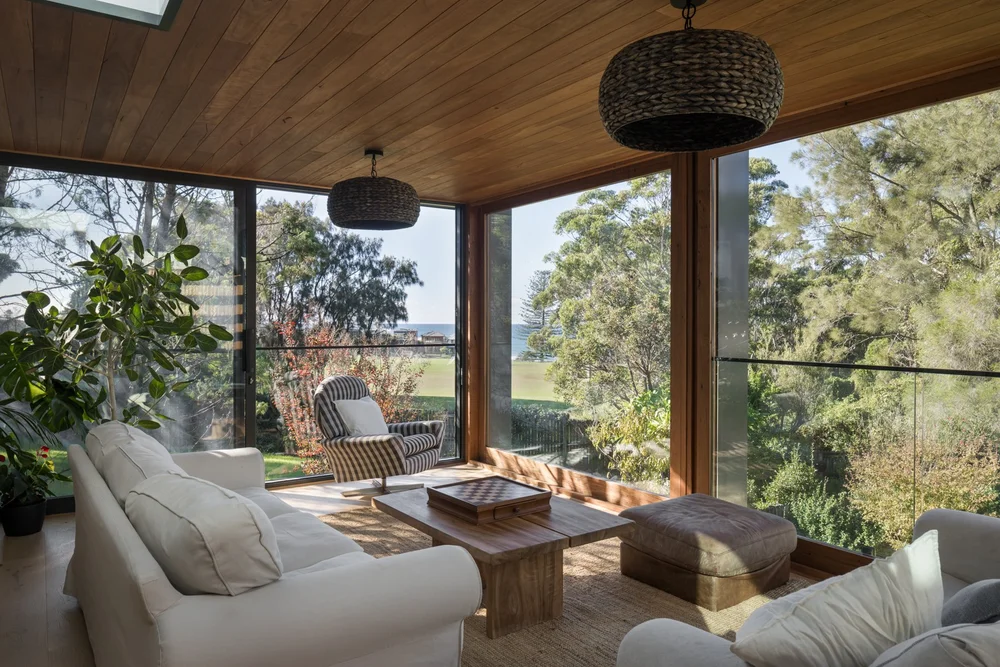
A full extension budget, line by line
The construction price is not your final spend. Here is a complete budget for a 45 m² ground-floor extension (two bedrooms and a bathroom) at a mid-range finish, on a flat Wollongong block, approved as complying development (CDC).
| Item | Low | High |
|---|---|---|
| Construction: 45 m² at $2,400–$2,800 per m² (mid-range) | $108,000 | $126,000 |
| Site preparation, flat block | $10,000 | $20,000 |
| Geotechnical report | $1,500 | $2,500 |
| Professional fees: designer or architect, engineers, certifier, 8–12% of construction | $8,640 | $15,120 |
| Approval: CDC plus occupation certificate | $4,500 | $7,500 |
| Wollongong s7.12 levy: nil where it can't be levied, 0.5% on work of $100,000–$200,000 | $0 | $856 |
| Long Service Levy: only on work of $250,000 or more | $0 | $0 |
| Housing and Productivity Contribution: no new dwelling | $0 | $0 |
| Demolition and making good where the extension joins the house | Priced after inspection | |
| Subtotal | $133,000 | $172,000 |
| Contingency, 10% (low) to 15% (high) | $13,000 | $26,000 |
| All-in | $146,000 | $198,000 |
Before contingency, everything on top of construction adds about $25,000–$46,000 here. A sloping block, a DA, a premium specification or problems in the existing house push that higher.
The council and NSW charges on an extension
These are set by the NSW Government or your council, not by the builder. Extensions get off lighter than new homes, but they aren't free of them.
Council s7.12 levy
Wollongong City Council's levy is a percentage of the cost of the work: nil up to $100,000, 0.5% from $100,000 to $200,000 and 1% above $200,000. Council's plan says it can't be levied on alterations to an existing dwelling where a s7.11 contribution was paid at subdivision. Other councils set their own plans.
Housing and Productivity Contribution
Usually not payable. The NSW contribution applies to new residential development and is charged per new dwelling. An extension to an existing house doesn't create one. Adding a second dwelling, such as a dual occupancy, can trigger it.
BASIX
Alterations and additions valued at $50,000 or more need a BASIX certificate. The commitments it sets, such as efficient lighting, glazing and insulation in the new work, flow into the build cost.
Long Service Levy
0.25% of the cost of building work of $250,000 or more, GST included. It is paid before your CDC or construction certificate is released. On a $300,000 extension it is $750.
Home building compensation cover
Your builder must take out HBC cover for residential work over $20,000. NSW law caps the deposit at 10%, and where HBC applies the builder can't take any payment until the cover is in place.
Written contract
Work over $5,000 needs a written contract, and work over $20,000 needs a large job contract. NSW also gives you statutory warranties: 6 years for major defects and 2 years for other defects.
Sources: Wollongong City-Wide Development Contributions Plan (2026); NSW Planning, Housing and Productivity Contribution; NSW Planning Portal, BASIX alterations and additions; NSW Government, Long Service Levy; SIRA, HBC; NSW Government, building contracts.
Hidden costs: the house and the site
A new home starts with a clean slate. An extension starts with whatever the existing house is hiding, which is why CKS Projects inspects before pricing. A geotechnical report for new footings costs $1,500–$2,500, and it is the cheapest insurance you will buy.
- Asbestos: found in many older homes. More than 10 m² of non-friable asbestos needs a licensed removalist (SafeWork NSW).
- Outdated wiring and plumbing: where the new work connects to old services, they may need upgrading.
- Termite damage: found once linings come off, and repaired before new work is tied in.
- Footings and framing: a second storey usually needs the existing footings and walls checked by an engineer and often strengthened.
- Rock: $150–$250 per cubic metre to remove if you hit it digging new footings.
- Tight access: narrow streets and difficult deliveries add 5–10% to labour. Coastal sites with difficult access cost 10–15% more to build.
- Slope: cut, fill, retaining and drainage add cost on a sloping block. See sloping block builders in Wollongong.
- Living elsewhere: with the roof off for a second storey, you may need to move out for part of the build. Budget for rent.
Build out or build up?
Ground-floor extension
Cheaper per square metre. You can often stay in the house, and it's the natural way to open living areas to the garden. It needs yard space and new footings.
Second-storey addition
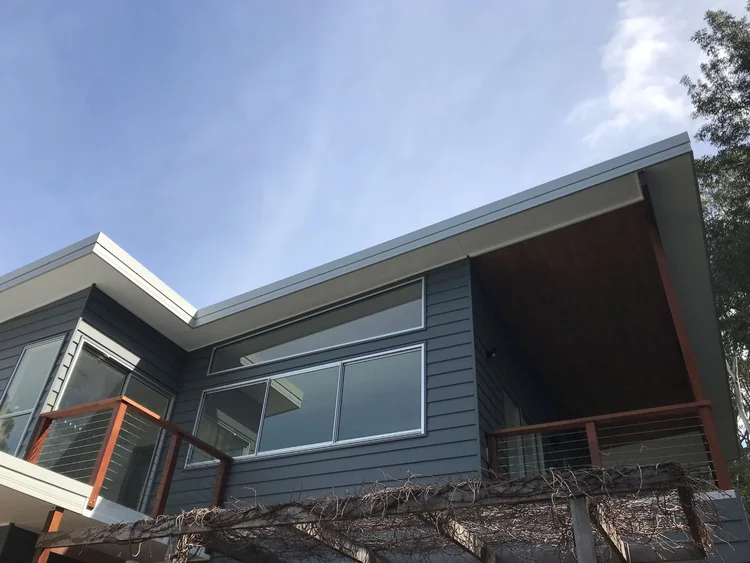
Keeps the garden and suits tight or steep blocks. Two-storey work costs $400–$600 per m² more, it needs structural work on the existing house and a new stair, and you may need to move out for part of the build.
Extend, knock down and rebuild, or move?
| Extend | Knockdown rebuild | Sell and buy | |
|---|---|---|---|
| Best when | The house is sound and you need one or two more rooms | You'd rebuild most of the house anyway, or it has major structural or layout problems | The block or the location no longer suits you |
| Main costs | Construction, tie-in to the existing house, fees and approvals | Demolition, a new home, and all new-home charges | Transfer duty, agent's commission, legal fees and moving |
| Where you live | Often at home for a ground-floor extension | Elsewhere for the whole build | Move once |
Compare the options before you commit to a design. Read about knockdown rebuild in Wollongong, or check transfer duty with Revenue NSW.
CDC vs DA for an extension: cost and time
| Complying development (CDC) | Development application (DA) | |
|---|---|---|
| When it applies | Alterations and additions that meet every standard of the Housing Code, including some second storeys | Slope, vegetation, heritage or a design outside the code |
| Approval fees | $3,000–$5,000 | $8,000–$15,000, plus a construction certificate at $3,000–$5,000 |
| Extra reports | Usually fewer | $5,000–$15,000: traffic, acoustic, arborist and others as required |
| Time | In as little as 20 days | 12–16 weeks minimum |
| Both pathways | An occupation certificate ($1,500–$2,500), a BASIX certificate for work of $50,000 or more, and the Long Service Levy on work of $250,000 or more | |
Pathways: NSW Planning Portal, Housing Code and NSW Planning, exempt development. Fee ranges are CKS Projects' guide figures. Read more on council approval.
How to bring the cost down without cutting corners
Keep the form simple
Complex shapes, multiple roof lines and extensive glazing add 15–25% to construction. A simple roof that ties into the existing one costs less.
Build out if you can
Building out avoids the $400–$600 per m² that two-storey work adds, and the structural work on the existing house.
Spend on the right finishes
Mid-range is usually the sweet spot. Porcelain tiles that look like marble cost about half as much and perform as well.
Keep wet areas together
Placing a new bathroom or laundry near existing plumbing saves on new drainage runs.
Take the CDC route where you can
If the design meets the Housing Code, a CDC means lower fees, fewer reports and an approval in weeks, not months.
Test the ground and the house first
A $1,500–$2,500 geotechnical report and an inspection of the existing structure prevent surprises in the middle of the build.
How CKS Projects prices an extension
Discovery call
Your home, your goals and your budget, and an honest view of what makes sense.
Inspection
We look at the structure, services and site before we price anything.
Design and approvals
Drawings, engineering, BASIX and any reports are coordinated, and we manage the CDC or DA pathway.
Fixed-price quote and build
A detailed fixed-price quote with a documented scope before any contract is signed, then regular site meetings and an online client portal.
See our home extensions in Wollongong and home renovations, or read why we favour fixed-price quotes.
Extension cost FAQs
How much does a home extension cost in NSW?
On CKS Projects' figures, construction alone costs about $2,000–$3,800 per square metre for a ground-floor extension and $2,400–$4,400 per square metre for a second-storey addition, depending mostly on the finish level. A 45 m² ground-floor extension at a mid-range finish costs about $108,000–$126,000 to build, and about $145,000–$195,000 all-in once site works, professional fees, approvals and a 10–15% contingency are added.
How much does a second-storey extension cost?
Construction runs about $2,400–$4,400 per square metre, because two-storey work costs $400–$600 per m² more than single-storey work on CKS Projects' figures. About 45 m² of second storey at a mid-range finish comes to about $155,000–$205,000 with fees, approval and contingency. On top of that, the existing footings and walls often need strengthening to carry the new level. That work depends on the house, so CKS Projects prices it after an inspection.
What is the cost per square metre for a house extension?
CKS Projects' guide ranges are $2,000–$2,400 per m² for a basic finish, $2,400–$2,800 for mid-range and $3,000–$3,800 for premium when you build out at ground level. A second storey adds about $400–$600 per m². Complex shapes, multiple roof lines and extensive glazing add 15–25% to construction.
Is it cheaper to build out or build up?
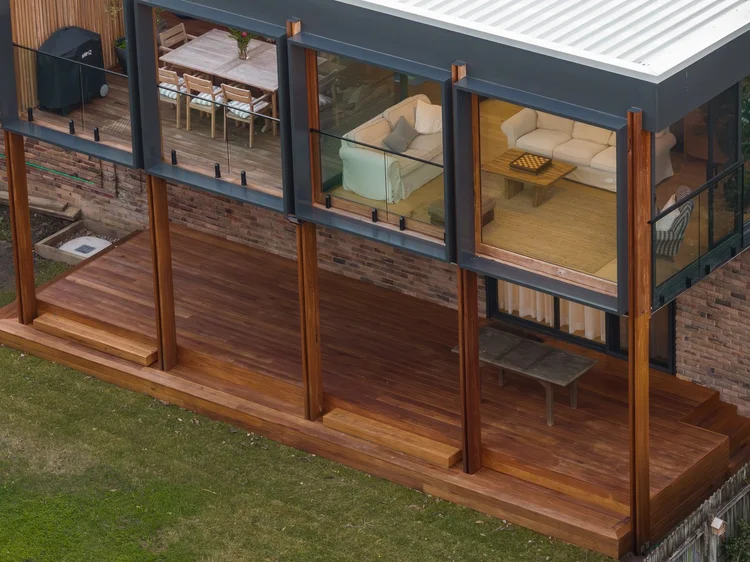
Per square metre, building out at ground level is usually cheaper. A second storey costs about $400–$600 per m² more to build, needs structural work on the existing house and a new stair, and you may need to move out while it is built. Building up makes sense when the block can't take a ground-floor extension, as at Wombarra, where a steep, narrow block meant the only way was up.
What council fees apply to a home extension in Wollongong?
Approval fees are about $3,000–$5,000 for a CDC or $8,000–$15,000 for a DA. Wollongong City Council's section 7.12 levy is nil for work up to $100,000, 0.5% from $100,000 to $200,000 and 1% above $200,000, but council's plan notes it can't be levied on alterations to an existing dwelling where a section 7.11 contribution was paid at subdivision, so check with council. You also need a BASIX certificate for work of $50,000 or more, and the Long Service Levy of 0.25% applies to work of $250,000 or more.
Do I pay the Housing and Productivity Contribution on an extension?
Usually not. The NSW Housing and Productivity Contribution applies to new residential development and is charged per new dwelling. An extension to an existing house doesn't create a new dwelling. If the work adds a second dwelling, such as a dual occupancy, it can apply.
Do I need council approval for a home extension?
Most extensions need some form of approval, but not always a council DA. Many alterations and additions, including some second storeys, can be approved as complying development (CDC) under the Housing Code if every standard is met, in as little as 20 days. Others need a development application, then a construction certificate before work starts.
Is it cheaper to extend or knock down and rebuild?
It depends on how much of the existing house is worth keeping. If the structure is sound and you need one or two more rooms, extending usually costs less. If you would be rebuilding most of the house anyway, or the old house has major structural, asbestos or layout problems, a knockdown rebuild can be better value. Compare both before you commit to a design.
How much contingency should I allow for a home extension?
Allow 10–15% on top of your final estimate: 10% as a minimum and 15% to be safer. Extensions carry extra unknowns, because the existing house can hide asbestos, outdated wiring or plumbing, termite damage or footings that need work.
What hidden costs come with extending an older home?
The common ones are asbestos, outdated wiring and plumbing that must be brought up to standard where you connect to it, termite damage, and footings or framing that need strengthening. In NSW, removing more than 10 m² of non-friable asbestos needs a licensed removalist. CKS Projects inspects the home before pricing so these show up in the quote, not halfway through the build.
Can I get a fixed price for a home extension?
Yes. CKS Projects inspects your home first, then gives you a detailed fixed-price quote with a documented scope and cost breakdown before any contract is signed.
How long does a home extension take?
It depends on the scope, the approval pathway, site conditions and selections. A complying development certificate (CDC) can be issued in as little as 20 days, while a DA usually takes at least 12–16 weeks. CKS Projects outlines a realistic program once your scope is understood.
How much deposit can a builder ask for on an extension?
Under NSW home building law the maximum deposit is 10%. For work that needs home building compensation cover, which is residential work over $20,000, the builder can't ask for any payment until the cover is in place and you have the certificate.
Get a real number for your home
Tell us about your home and what you need. We'll inspect it, then quote your extension at a fixed price before you sign.
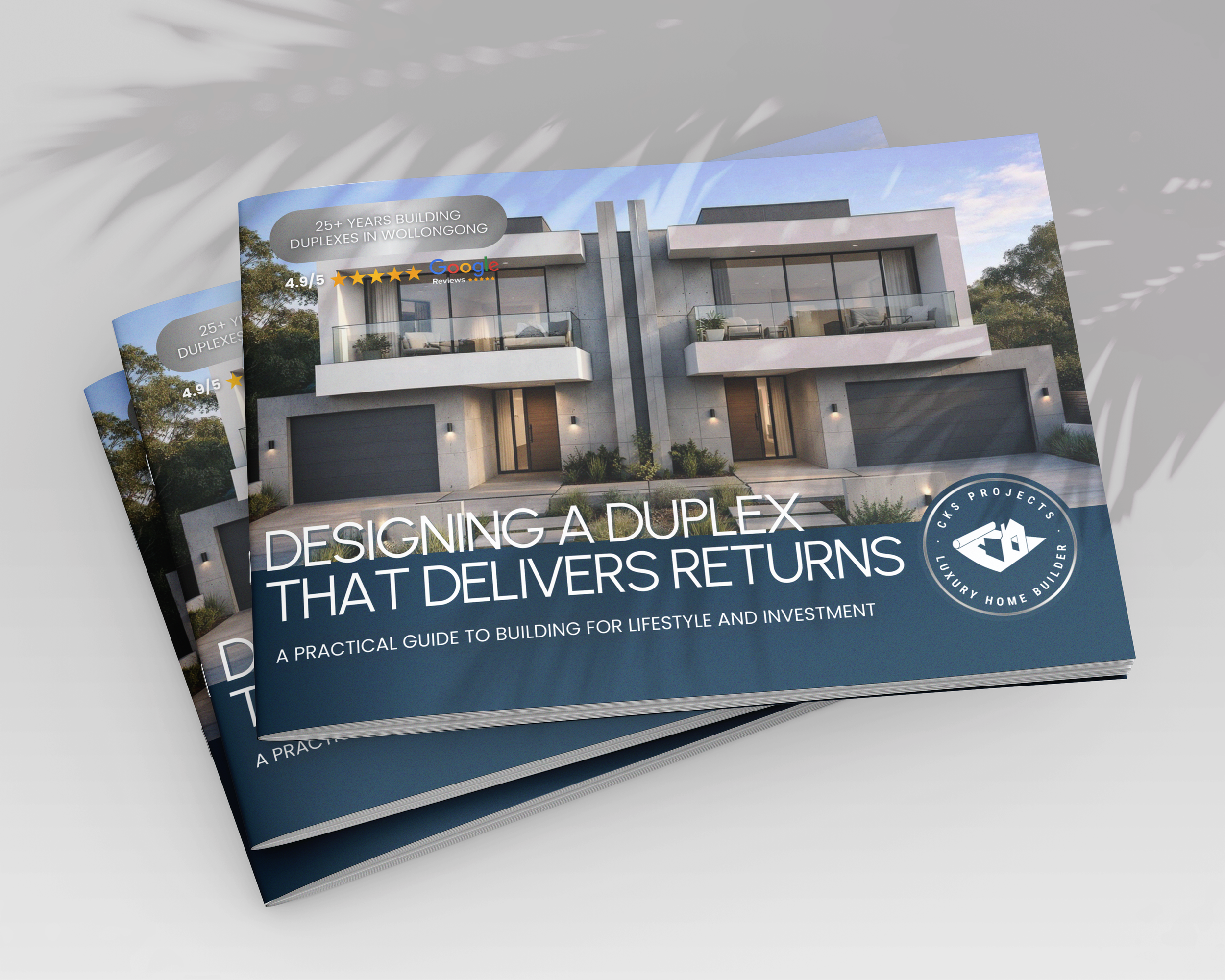
DESIGNING A DUPLEX THAT DELIVERS RETURNS
Whether you're looking to live in one and rent the other, build for extended family, or maximise your land’s potential, this guide will help you avoid costly mistakes and make confident decisions.
