
Prime Cost Items vs Provisional Sums: What Your Builder's Allowances Really Mean
Prime cost or provisional sum: what's the difference?
Both are allowances: amounts in your contract price for things that can't be priced exactly when you sign. A prime cost (PC) item covers an item you haven't chosen yet, like an oven or tapware. A provisional sum (PS) covers work the builder can't price yet, like rock excavation. When the real cost is known, the price goes up or down, and you usually pay the builder's margin on any amount over the allowance.
- PC iteman item you'll choose later
- Provisional sumwork that can't be priced yet
- Over the allowanceyou pay the excess plus margin
- Margin above 20%question it, says the NSW contract
Selections made and priced before you sign, logged against your allowances. NSW contractor licence 258735C.
By Keiron Moore, Director of CKS Projects, with 25+ years building on the South Coast. Updated October 2026.
Important Disclaimer:
“This article is general guidance, not an exact price guide, guaranteed returns, or a substitute for professional advice or a formal quote. Construction costs, rental yields, and capital growth examples reflect 2025 conditions and will vary with site constraints, design, materials, and market movements. Speak with a qualified financial adviser before making investment decisions. For accurate estimates and design recommendations for your site, contact CKS Projects. We’ll provide a comprehensive consultation and a formal quote tailored to your Wollongong build.”
Government charges are as published at the date shown and change over time.
Prime cost items vs provisional sums at a glance
| Prime cost (PC) item | Provisional sum (PS) | |
|---|---|---|
| What it is | An allowance for an item you haven't selected yet | An allowance for work the builder can't give a definite price for |
| Typical examples | Stove and appliances, tapware, special kitchen and bathroom products | Rock excavation, concrete piers, work that depends on what's found in the ground |
| What the amount covers | The cost of the item. In the NSW Government contract, installation and connection are in the contract price unless stated otherwise | The cost of the work, often worked out as a rate times an estimated quantity |
| If it costs more | You pay the excess plus the contractor's margin on the excess | You pay the excess plus the contractor's margin on the excess |
| If it costs less | The contract price goes down by the difference | The contract price goes down by the difference |
| Proof of cost | Invoice or receipt for the purchase price | Invoice or receipt, and the chance to be on site while the work is done |
| What you control | Your selection, and when you make it | Mostly the information before you sign, such as a geotechnical report |
Source: NSW Government, home building contract for work over $20,000 (Building Commission NSW, July 2025 edition), clauses 10 and 11.
How the price changes: two worked examples
A prime cost item: the kitchen
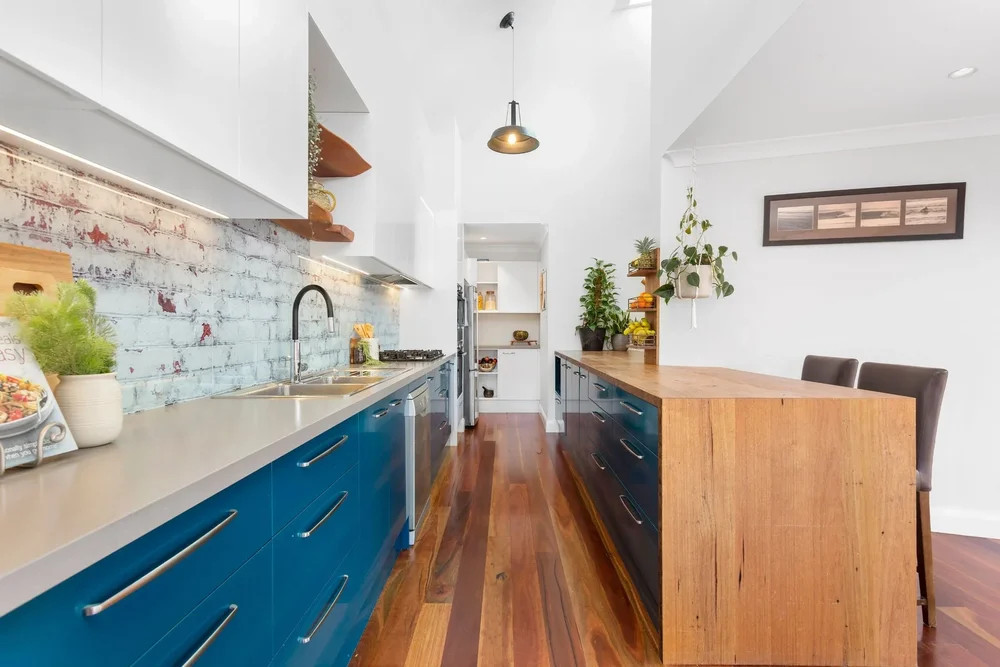
Your contract allows $18,000 for the kitchen. You choose one that costs $24,000. If your contract's margin on excess is 15%, you pay the $6,000 difference plus $900 margin: $6,900 more. Choose one that costs $16,000 instead and the price comes down by $2,000.
A provisional sum: rock
Rock removal costs $150–$250 per cubic metre on CKS Projects' figures, and severe rock can add $30,000–$60,000. Say the contract carries a rate of $200 per cubic metre and an estimate of 40 cubic metres: an $8,000 provisional sum. If 60 cubic metres comes out, the work costs $12,000, and you pay the $4,000 excess plus the margin on it.
The margin percentages and quantities above are examples. Your own contract sets the margin, and a geotechnical report ($1,500–$2,500) before you sign is the best way to size a rock allowance.
What the NSW contract says about allowances
The NSW Government's standard contract for work over $20,000 sets out how prime cost items and provisional sums work. Many builders use an industry contract instead, so check the clauses in yours, but these are the terms to look for:
Estimated with reasonable care and skill
The contractor warrants that the allowances were estimated with reasonable care and skill, using the information available when the contract was signed.
Margin on the excess only
When an item costs more than its allowance, the contractor's margin applies to the excess, at the percentage written into the contract. The notes say to question any margin above 20%.
Credits when it costs less
If the actual cost is less than the allowance, the contract price is reduced by the difference.
Proof of the actual cost
The contractor must give you the invoice, receipt or other document showing the actual cost when payment is requested.
You can watch the work
For provisional sum work, the contractor must offer you the chance, with written notice, to be on site to verify the actual cost.
Selections on time
For prime cost items, you select each item with the contractor's advice, and the contractor must give you written notice of when each selection is needed.
The same contract's notes say provisional sums should only be used where the contractor can't give a definite price, that excessive use should be avoided, and that a rate item works better where the quantity is the unknown, such as rock.
Source: NSW Government, home building contract for work over $20,000, clauses 10 and 11 and their notes. See also NSW Government, contracts for building work.
Allowance, PC or PS: why the words in your contract matter
Quotes often say "allowance" for anything not yet priced. Contracts are interpreted on their express terms. In a 2026 ACT Court of Appeal decision, reported by Master Builders, items called allowances in a builder's quote but not properly recorded in the contract's provisional sum or prime cost schedules were described as potentially fatal to the builder's claim for the overrun. That case is from the ACT, not NSW, but the lesson applies to every contract: the quote, the contract and the schedules should use the same words.
Watch for these:
- Schedules that say "see quote" instead of listing each item with a description and an amount.
- Low allowances. A $10,000 kitchen allowance makes a quote look cheaper than one with $25,000, but if the kitchen you want costs $25,000, the cheaper quote isn't cheaper.
- Lots of provisional sums. Each one is part of the price that can still move. Ask why it can't be fixed.
- A margin charged on the whole cost. Under the NSW Government contract, the margin applies to the excess over the allowance, not the full amount.
- No selection deadlines. Late selections can delay the build and push you into whatever is in stock.
Picture an $850,000 quote that needs another $65,000 to actually finish the home once the items it left out are added: the example in our guide. Read more on how to get an accurate building quote and fixed price vs cost plus contracts.
Questions to ask about allowances before you sign
- Which items in this quote are prime cost items, which are provisional sums, and what is each one's amount?
- Is every allowance listed in the contract's schedules, with a description, or only in the quote?
- What is the margin on any excess, and is it charged on the excess only?
- What did you base each allowance on? For a kitchen, which brand and range does the amount buy?
- Does the prime cost amount include installation, or only the item?
- Why can't each provisional sum be given a fixed price? Would a geotechnical report or survey let you fix it?
- When do I have to make each selection, and how will I see the price of my choices before I commit?
How CKS Projects sets allowances
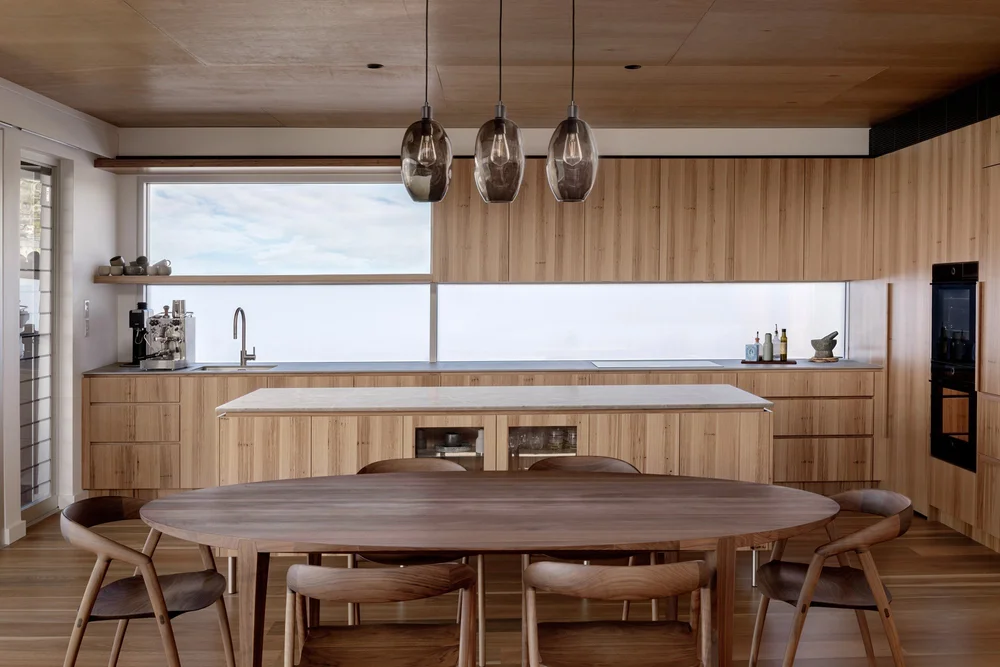
Allowances are realistic from day one, so your fixed price reflects the home you actually designed.
Selection kickoff
Your style direction, budget allowances and a deadline for every selection category are mapped, so nothing holds up the build.
Curated shortlists
Pre-vetted options for each category, matched to your style, your budget and the Illawarra's coastal conditions.
Portal logging and pricing
Each confirmed selection is logged in the Wunderbuild client portal with itemised pricing. Any change from the allowance is priced immediately.
Final sign-off
Your specification schedule is locked into your fixed-price contract and build program before a trade starts on site.
See how CKS Projects runs design selections and cost planning, why it doesn't work from a standard range in builder inclusions vs custom selections, and what a house costs to build in NSW. Building on rock or a slope? See sloping block builders.
Prime cost and provisional sum FAQs
What is the difference between a prime cost item and a provisional sum?
A prime cost item is an allowance for an item you haven't chosen yet, such as an oven, tapware or a vanity. A provisional sum is an allowance for work the builder can't price exactly yet, such as rock excavation. Both are adjusted to the actual cost once it's known.
What is a provisional sum in a building contract?
An estimate, included in the contract price, for an item of work the builder cannot give a definite price for when you sign. Rock excavation is the classic example. The NSW Government contract for work over $20,000 says provisional sums should only be used where the work can't be priced before it is done.
What is a prime cost item?
An item you haven't selected when you sign, such as the stove or special kitchen and bathroom products. The contract allows an amount for the item itself. In the NSW Government contract, installation and connection are included in the contract price unless the contract says otherwise.
Do I pay a builder's margin if a prime cost item or provisional sum goes over?
Usually, yes, but only on the excess. In the NSW Government contract for work over $20,000, you pay the amount over the allowance plus the contractor's margin on that excess, at the percentage written into the contract. The contract's own notes say to question any margin above 20%.
What happens if the actual cost is less than the allowance?
Under the NSW Government contract, the contract price is reduced by the difference between the allowance and the actual cost, usually in the next progress payment.
Can I see what a provisional sum item actually cost?
Yes. The NSW Government contract requires the builder to give you a copy of the invoice, receipt or other document showing the actual cost when payment is requested, and to offer you the chance to be on site, with written notice, while provisional sum work is done.
How many provisional sums is too many?
There is no set number, but the NSW Government contract notes say excessive use of provisional sums should be avoided, and that you should ask the builder to explain why any item can't be given a fixed price. Every allowance is a part of the price that can still move.
Is an allowance the same as a prime cost item?
Not necessarily. Some quotes say "allowance" for both prime cost items and provisional sums, or for neither. What counts is what your contract says: check each allowance in the quote is listed in the contract's prime cost or provisional sum schedule, with a description and an amount.
How does CKS Projects handle allowances?
Your selections are made before contract, with specialist support, and logged against your allowances in the Wunderbuild client portal with itemised pricing. Any upgrade or downgrade is priced before you commit, and the specification is locked into the fixed-price contract before work starts.
Get a price with realistic allowances
Tell us about your land and what you want to build. We'll talk it through for free, take you through your selections and give you a detailed fixed-price quote before you sign.
